
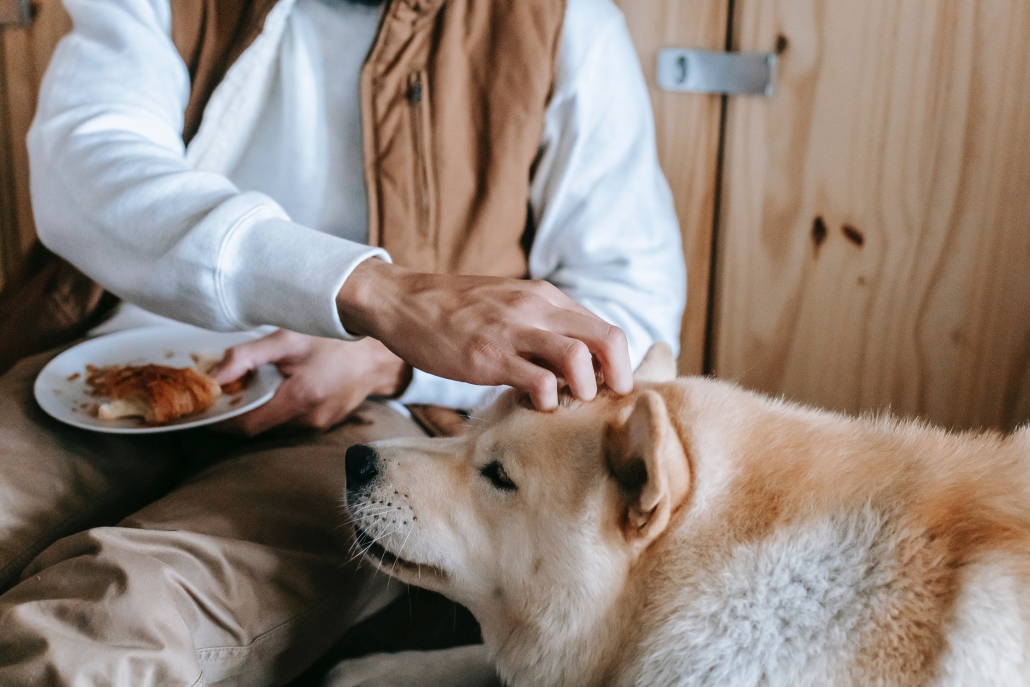
Yes, Your Dog Can Have Some Turkey
A little plain turkey can be part of the holiday. Here’s how to decide what else belongs in your pet’s bowl.
When someone asks whether their dog can have turkey, I want to know which part of the meal we’re talking about. A little plain meat, without the skin or bones, is generally fine for a healthy dog.¹ A plate of leftovers covered in gravy is another question, even though both might get described as “some turkey.”
Holiday food advice tends to skip over those details. We get lists of dangerous foods, often with turkey somewhere near grapes and chocolate, and the safest-sounding answer becomes “don’t share anything.” I don’t think that helps people understand food or make better decisions about feeding their pets. We can explain the risks and still give them something to say yes to.
Turkey Skin, Gravy and Pancreatitis
Turkey skin, pan drippings and rich gravy can give a dog considerably more fat than they’re used to eating. That can mean vomiting or diarrhea, and in some dogs it may contribute to pancreatitis.² If you want to share the turkey, a small piece of lean meat is a better choice than the skin you’ve peeled off your own serving.
The pancreas produces enzymes that help digest food. With pancreatitis, some of those enzymes become active too early, while they’re still inside the pancreas, and contribute to damage and inflammation.³ It can be a painful, serious illness, which is why advice about rich leftovers deserves more explanation than “they might get an upset stomach.”
We also need to be honest about what we know. Many cases of pancreatitis have no identifiable cause,³ and the relationship with diet is more complicated than saying that any fatty food will make any dog sick. Research has found an association between pancreatitis in dogs and eating table scraps, unusual foods or trash.⁴ That research relied partly on owners remembering what their dogs had eaten, so it can’t tell us that a particular spoonful of gravy caused a particular case.
For a dog who has had pancreatitis or needs a fat-restricted diet, follow the plan you have with your veterinarian. There’s no reason to test their tolerance at Thanksgiving. For a healthy dog, you can offer a little plain meat without adding the skin and drippings. And although cats can also develop pancreatitis, we shouldn’t assume that the relationship between fat and the disease is the same in both species.³
Is a Little Garlic Safe?
An accidental trace of garlic in a bite of food and repeated servings of a heavily seasoned dish carry different risks. To determine the risk we need to consider the pet’s size, health, and history of exposure.
The Japanese study that comes up so often in this discussion was conducted at Hokkaido University. Four dogs were given garlic extract equivalent to five grams of whole garlic per kilogram of body weight, every day for seven days.⁵ For a 50-pound dog, that works out to roughly four ounces of garlic a day. The dogs developed red blood cell changes, although none developed hemolytic anemia. It was a very high exposure, and it doesn’t tell us what happens when a dog gets a small taste of lightly seasoned food.
There’s more to the evidence than that experiment. The National Research Council recognized a history of safe garlic intake in dogs and estimated a presumed safe intake, while explaining that the available research couldn’t establish a definitive upper safe limit.⁶ We should include that history when we discuss garlic, rather than treating every amount as though it were the dose used in the study.
The concern comes from sulfur-containing compounds in garlic, including sodium 2-propenyl thiosulfate. Researchers isolated it from boiled garlic and found that it caused oxidative damage when applied directly to canine red blood cells in a laboratory.⁷ That damage can affect hemoglobin, which carries oxygen, and leave the cells more vulnerable to destruction. The experiment helps explain how injury can happen; it doesn’t translate directly into a prediction about a bite of dinner.
Garlic is also used in products marketed for natural flea and tick support,⁸ and garlic-containing supplements are sold by manufacturers participating in the National Animal Supplement Council, or NASC.⁹ Its standards include manufacturing oversight, labeling requirements and monthly adverse-event reporting.¹⁰ Those requirements cover product quality and monitoring; a product’s ability to control fleas or ticks is a separate question.
For holiday dinner, it’s easy enough to set aside some food before the seasoning goes in. If a dog does get a small taste of something containing garlic, the amount and the individual animal should guide the assessment. Cats are more susceptible to allium-related red blood cell injury,¹¹ so we can’t take advice for a healthy adult dog and apply it to every pet in the house.
Why Cooked Bones Are Dangerous
Cooked turkey bones can splinter, cause choking, injure the digestive tract or become lodged in the intestines.¹,² The meat left on them doesn’t make them a suitable treat, so give your pet boneless meat and put the carcass somewhere they can’t reach.
That includes the trash. A bag beside the kitchen door is still available to a dog who has been watching you carve the turkey for the last half-hour.
If your pet swallows a cooked bone, call your veterinarian for advice,¹ even if they seem comfortable. Explain what they swallowed and when, so the veterinary team can help you decide what needs to happen next.
Foods to Keep Away From Pets
Grapes and raisins can cause kidney injury in dogs, and individual responses vary.¹² Having eaten them before without getting sick doesn’t mean a dog can safely eat them again. Remember to check stuffing, fruitcake and raisin bread, where they’re easier to overlook.
Xylitol, also called birch sugar or wood sugar, can trigger a rapid release of insulin in dogs and a dangerous drop in blood sugar.¹³ It turns up in some sugar-free desserts, baked goods and nut butters, so read the ingredients when you’re making homemade treats, too. If your dog eats a product containing xylitol, contact your veterinarian or an animal poison service immediately.
Chocolate contains theobromine and caffeine, which can affect the heart and nervous system.¹⁴ The kind of chocolate makes a difference: cocoa powder and baking chocolate contain more of these compounds than milk chocolate. Tell your veterinarian what kind of chocolate it was, how much was eaten and your pet’s weight.
Keep rising bread dough out of reach as well. Unbaked yeast dough can expand in the stomach while fermentation produces alcohol,¹² which makes it a different concern from a piece of baked bread.
If your pet eats a potentially toxic food, you don’t have to wait for symptoms before calling for advice.¹⁵ Save the packaging or recipe and estimate how much is missing. That gives the person helping you something more useful to work with than “he ate some dessert.”
What Your Pet Can Have
Set aside their portion while you’re preparing the meal. A little plain turkey, some cooked carrot or green bean, or a small amount of plain pumpkin or cooked sweet potato can be options for a healthy dog who tolerates those foods.² You can reserve a few pieces before adding butter, sauces or seasoning, without making a separate dinner.
Check the pumpkin can, though. Plain pumpkin puree and pumpkin pie filling are different products.
For a cat, a small piece of plain, lean turkey may be plenty.¹⁶ There’s no need to make their serving resemble the meal everyone else is eating.
The World Small Animal Veterinary Association recommends keeping treats below 10 percent of daily calories for dogs and cats,¹⁷,¹⁸ including everything offered over the course of the day. Pets with food sensitivities, medical conditions or prescribed diets may need a different plan.
One way to avoid losing track is to put the day’s treats in a container and let guests offer pieces from it. Otherwise, everyone gives the dog a little, and nobody knows how much they’ve eaten.
If you’re working on a holiday recipe for your pet, bring us the ingredients and any dietary restrictions you’re trying to accommodate. At NorthPoint Pets, we can help you think through alternatives and identify questions to take to your veterinarian. We don’t diagnose, treat, or replace veterinary care. We provide nutrition education and product guidance.
You can enjoy giving your pet something special. Set aside a small portion that suits them, let the family know what they can offer, and enjoy your dinner.
References
- American Veterinary Medical Association. Thanksgiving pet safety. Accessed November 23, 2026.
- Cohen A. Holiday hazards. Cornell Riney Canine Health Center. December 4, 2025.
- Steiner JM. Pancreatitis in dogs and cats. Merck Veterinary Manual. Updated September 2025.
- Lem KY, Fosgate GT, Norby B, Steiner JM. Associations between dietary factors and pancreatitis in dogs. J Am Vet Med Assoc. 2008;233(9):1425-1431. doi:10.2460/javma.233.9.1425
- Lee KW, Yamato O, Tajima M, Kuraoka M, Omae S, Maede Y. Hematologic changes associated with the appearance of eccentrocytes after intragastric administration of garlic extract to dogs. Am J Vet Res. 2000;61(11):1446-1450. doi:10.2460/ajvr.2000.61.1446
- National Research Council. Safety of Dietary Supplements for Horses, Dogs, and Cats. Report brief. National Academies; 2008.
- Yamato O, Sugiyama Y, Matsuura H, et al. Isolation and identification of sodium 2-propenyl thiosulfate from boiled garlic (Allium sativum) that oxidizes canine erythrocytes. Biosci Biotechnol Biochem. 2003;67(7):1594-1596. doi:10.1271/bbb.67.1594
- Springtime Supplements. Bug Off Garlic Granules for Dogs. Manufacturer’s product description. Accessed November 23, 2026.
- NaturVet. Brewers Dried Yeast with Omegas Chewable Tablets for Dogs and Cats. Manufacturer’s ingredients and NASC information. Accessed November 23, 2026.
- National Animal Supplement Council. Frequently asked questions. Accessed November 23, 2026.
- Hayes C. Garlic and onion (Allium spp) toxicosis in animals. Merck Veterinary Manual. Updated September 2024.
- Gwaltney-Brant SM. Food hazards. Merck Veterinary Manual. Updated May 2026.
- US Food and Drug Administration. Paws off xylitol; it’s dangerous for dogs. Accessed November 23, 2026.
- Hayes C. Chocolate toxicosis in animals. Merck Veterinary Manual. Updated February 2026.
- American Society for the Prevention of Cruelty to Animals. Garlic. Poison Control. Accessed November 23, 2026.
- Cornell Feline Health Center. Beware holiday hazards. Accessed November 23, 2026.
- World Small Animal Veterinary Association. Feeding treats to your dog. 2025.
- World Small Animal Veterinary Association. Feeding treats to your cat. 2025.